Geopolitika: Instruments of Continuity – The Mechanics of Empire
Anatomy of the empire’s invisible engine; how interfaces, not institutions, sustain the empire beyond consent.
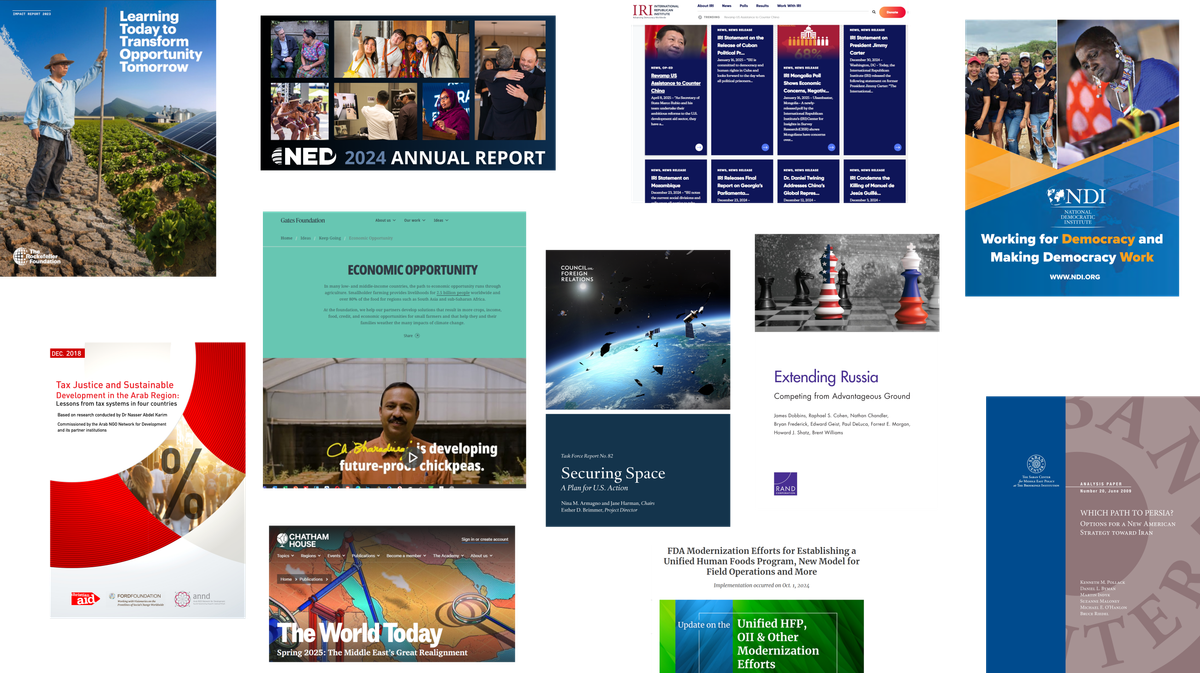
The empire is not just enforced by armies—it is sustained by interfaces: NGOs, media, foundations, corporations, and think tanks. These are sovereign-independent organs that outlive regimes, bypass legislation, and convert crises into jurisdiction.
This chapter is not about power grabs—it’s about power that never lets go. Positioned after the flashpoint anatomy of the last article and directly before the impasse analysis that follows, this section reveals the infrastructure behind the spectacle. What looks like state failure is often structural design. What appears as public policy is frequently the output of invisible systems, insulated from electoral cycles and immune to public correction.
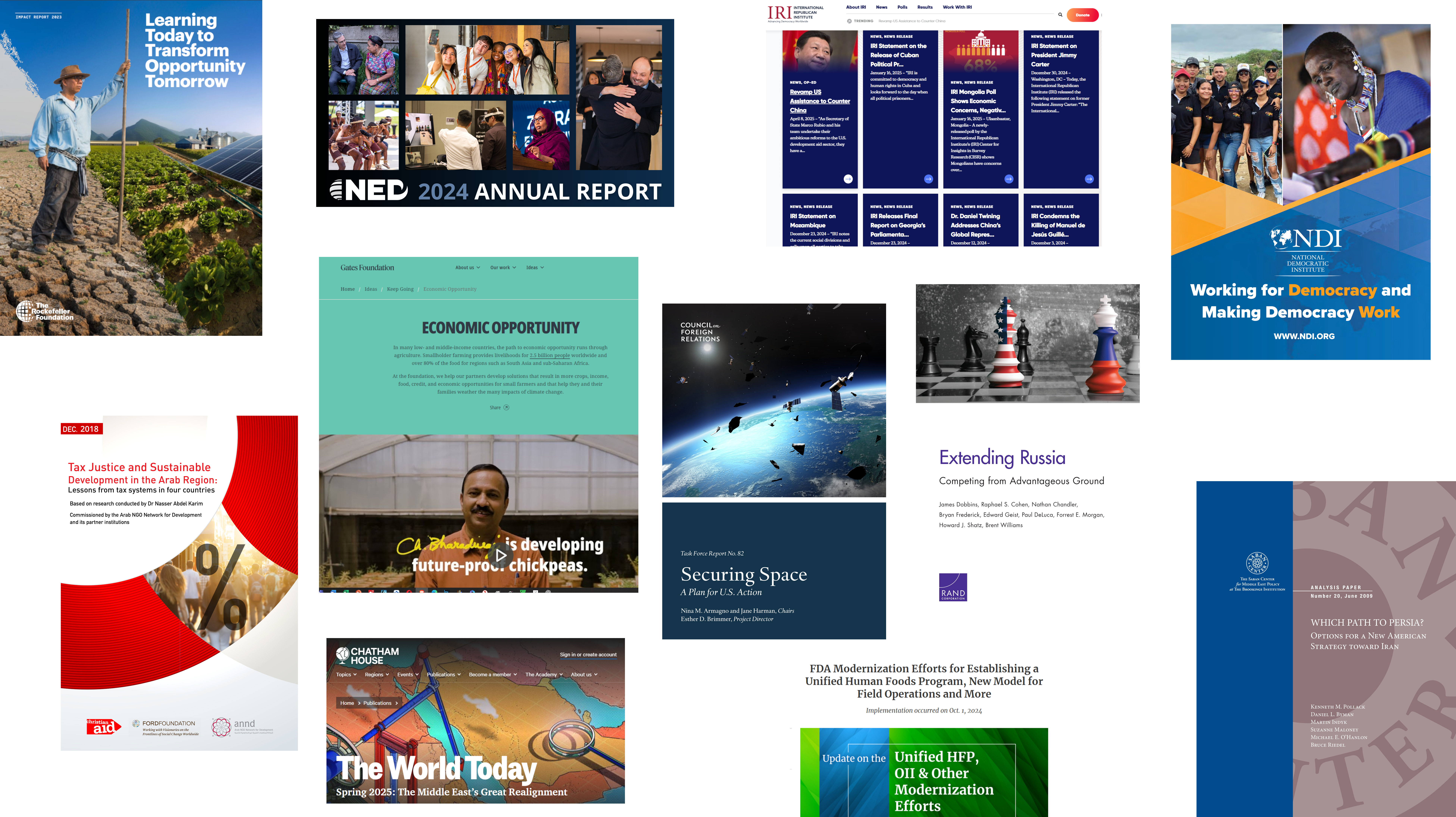
Rather than being an exposé of secret actors—it’s a blueprint of unaccountable permanence. NGOs, think tanks, and foundations aren’t just policy influencers—they are the scaffolding through which crisis becomes code, law becomes leverage, and governance becomes continuity. This is why reform narratives collapse: because the empire’s true engines don’t sit in the Oval Office or Capitol Hill. They rotate through foundations, interface with supranational bodies, and operate in crisis-as-code sequences that outlive regimes.
To understand why empires don’t fall—they metastasise—you have to trace the mechanisms that simulate change while preserving function. That’s what follows.
This part unpacks the operational mechanics behind the flashpoints, preparing for an understanding of why the U.S. system cannot reform or course-correct.
Empire Without Mandate: The Permanent Interface
The modern empire does not operate through conquest. It operates through continuity. And that continuity is not housed in elected governments or treaty organizations—it is embedded in sovereign-independent interfaces: NGOs, foundations, and think tanks. These are not extensions of state—they are substitutes for it.
NGOs as parallel foreign ministries:
NGOs such as the National Endowment for Democracy (NED), USAID, and the International Republican and Democratic Institutes (IRI/NDI) function as diplomatic infrastructure in their own right. Rather than supporting foreign policy from the sidelines, they operationalize it directly. These organizations execute policy beneath the threshold of formal intervention—advancing empire through civic interface rather than treaty, troop, or headline. This is diplomacy without consent—imperial will embedded in civil packaging.
- The National Endowment for Democracy (NED) is not a neutral donor. It is the deployment shell of engineered consent. Created by Congress but structured as a private nonprofit, NED disburses to thousands of groups in pre-destabilization zones. Its 2023 disclosures list operations in over 90 countries, with recurring targets in Eurasia, Africa, and Latin America. The board is populated by ex-State Department, intelligence, and party apparatus figures, evidencing its hybrid nature: a civilian-intelligence crossover organ. NED doesn’t promote democracy. It scaffolds regime transition in advance.
- USAID, hitherto the empire’s most public-facing humanitarian brand, functions as a civil-infrastructure overlay system. It built telecoms, bankrolled media outlets, seeded civil society, and shaped the administrative surface of future post-regime states—often in tandem with defense and intelligence contractors. Its “aid” is infrastructural code: interfaces that survive political upheaval and enable alignment without direct annexation. It is not developmental. It is synthetic sovereignty in kit form.
- IRI (International Republican Institute) and NDI (National Democratic Institute) operate as political formatting engines. Under the cover of partisan diversity, they train opposition leaders, manage civic tech, and simulate party systems long before ballots are cast. Their function is to prepare the outcome space—so that after intervention or collapse, the available choices are already empire-compliant.
Together, these actors conduct policy without consent. Their operations bypass parliaments, ignore national sovereignty, and are immune to reversal by local electoral means. They install the political firmware of U.S. interests without the optics of invasion. What arrives in the name of democracy is often a precompiled regime template, awaiting activation under crisis.
These are not NGOs in the conventional sense. They are non-military expeditionary assets—enabling regime formatting, narrative implantation, and sovereign bypass at the interface level.
They do not carry flags. They carry code. And where they arrive, national policy becomes a modular extension of the imperial script.
Foundations as funding arbitrage engines:
Elite foundations do not give to relinquish power—they give to entrench it. Their function is not charitable redistribution but strategic capital reformatting: converting tax-exempt wealth into jurisdictional command and narrative control. Gates, Ford, Rockefeller, and their successors operate as wealth-anchored policy engines, not just preserving their endowments, but leveraging them to format the operating system of global governance.
While their grants are real—Gates disburses billions annually—the structures ensure capital preservation and compounding. As of 2024, the Gates Foundation’s endowment stood at $77.2 billion, managed through Cascade Investment. The Ford Foundation holds $16.4 billion, and Rockefeller roughly $6 billion. These entities meet minimum giving thresholds while embedding their influence in program-related investments (PRIs), co-funded ventures, and policy-directing consortia.
Their funding does not exit the system—it formats it. Gates co-authors global standards via strategic alignment with WHO, GAVI, and emerging digital ID infrastructure. Ford finances epistemic gatekeeping, seeding DEI programs, academic credentialing, and media legitimacy structures that pre-align cultural discourse with regime compliance. Rockefeller engineers convergence through climate finance and ESG templates, shaping treaties, financial instruments, and multilateral governance according to its long-coded paradigms.
These are not acts of charity. They are influence allocations—monetized vectors of elite continuity. Consider:
- The Gates Foundation is not a finite donor but a financial sovereignty engine. It strategically co-funds with GAVI, WHO, and AI/data architecture initiatives, dictating health and tech policy through upstream control. Its capital remains intact even as its doctrine becomes embedded as international standard. Gates doesn’t merely advise governments—he finances the outcomes his doctrine anticipates.
- The Ford Foundation uses cultural investment to enforce ideological perimeter. It has deployed over $865 million in PRIs since 1968, channeling funds into media reform, civil society labs, and activist credentialing. These outputs stay within the regime’s ideological bandwidth while its endowment remains protected behind nonprofit status. Its rhetoric of equity masks its strategic asset insulation.
- The Rockefeller Foundation operates as dynastic continuity—recycling wealth into governance templates. From eugenics and oil diplomacy to climate treaties and pandemic simulation, its narrative infrastructure drives long-term policy arcs. Having deployed over $26 billion since inception, it continues to shape climate finance and food systems, not through public debate but through treaty annexes and financial leverage.
In crisis, these institutions do not respond—they stage-manage. They fund the foresight models that predict the emergency, the interventionist architectures that address it, and the editorial platforms that normalize it. The cycle is recursive: diagnose, “solve,” narrate—always from above, never at risk.
They do not serve the world. They preserve position within it—above jurisdiction, beyond recall, and immune to democratic override. Their influence is structural, not episodic. What they fund becomes global policy—not through vote, but through saturation. This is not generosity. It is engineered authorship—executed one monetized crisis at a time.
Think tanks as policy simulators:
Think tanks do not analyze reality—they encode the bounds of acceptable thought. Institutions like RAND, Brookings, CFR, and Chatham House do not respond to world events. They pre-sequence them. Their function is not to generate insight but to manufacture strategic inevitability under the veil of credentialed neutrality.
- RAND does not merely advise the Pentagon—it constructs policy simulations that become budget rationales, institutional doctrine, and operational blueprints. Its pandemic models shaped WHO response scripts. Its AI governance frameworks now underpin global digital ID legislation. RAND doesn't interpret trajectories—it writes them, then studies how well reality conforms to its code.
- Brookings serves as the domestic-legitimacy arm of globalist integration. Its outputs are not radical—they are regime-compatible by design. From climate finance to CBDC adoption to narrative framing around electoral "resilience," Brookings ensures that elite convergence is coated in procedural language and nonpartisan gloss. It provides the technocratic syntax through which managerial empire maintains bipartisan cover.
- CFR curates elite consensus and markets it as inevitability. Its reports pre-date public policy. Its task forces function as policy rehearsal rooms for upcoming strategic pivots. Its alumni staff the State Department, NSC, Treasury, and media outlets—ensuring that the monologue of empire becomes dialogue through institutionally synchronized echo.
- Chatham House scripts the visual language of international legitimacy. From climate summits to sanctions regimes, it deploys the aesthetic of consensus. It doesn't advise the UK. It orchestrates Atlanticist alignment rituals—embedding core directives across multilateral institutions and soft power nodes.
These are not independent voices. They are pre-authorization engines. They test ideological boundaries, assign narrative plausibility to empire-aligned futures, and algorithmically nullify dissent by framing it as epistemically unqualified.
They do not merely advise empire. They simulate it into existence—structuring discourse, laundering consent, and anchoring policy futures in the procedural theatre of expertise.
The state reads their reports. But by then, the script is already locked
The Corporate-State Grid: From Conflict of Interest to Command Model
What appears as corruption is often choreography. The U.S. governance system no longer operates as a balance of powers—it functions as a contractual ecosystem in which regulatory, military, and legislative bodies are not guardians of public interest but interfaces of monetizable throughput. The state has not been captured. It has been optimized—reengineered for recursive profitability through managed collapse.
Rotating doors : FDA, CDC, and NIH as pre-vendor assets:
Health regulators do not oppose the pharmaceutical sector—they supply it. The revolving door is not an aberration—it is the business model. Senior staff at the FDA, CDC, and NIH routinely transition into executive roles at the very firms they once “oversaw.” This is not breach. It is strategic alignment through role sequencing.
- Government reviews (e.g., GAO 1994) sanitized Monsanto’s controversial Posilac approval, setting the precedent for future procedural laundering.
- SSRN studies confirm that FDA approvals statistically correlate with subsequent private-sector recruitment.
- Watchdogs like POGO act as pressure valves—highlighting scandals to preserve narrative legitimacy, while never challenging the revolving structure itself.
These agencies do not regulate in the public interest. They credentialize private outcomes, issuing credibility in exchange for future alignment. Public health becomes a pretextual delivery vector for procedural credibility—eventually monetized at the boardroom level.
Client-state portfolio – Pentagon and State as defense market channels:
The U.S. military-industrial apparatus no longer exists to defend the state. It services a portfolio. The Pentagon and State Department operate as upstream logistics hubs for Lockheed, Raytheon, and Boeing—managing narrative, procurement, and foreign policy risk for their largest “clients.”
- In 2024 alone, defense firms spent over $149 million in lobbying, with 62% of lobbyists being former military or government officials.
- Public filings describe war as a “growth opportunity.” This isn’t cynical—it’s fiduciary doctrine.
- Defense contractors and foreign governments hire the same lobbying firms, confirming that diplomacy is now auctionable narrative management.
The Pentagon does not initiate strategy. It executes financialized scenarios. War becomes product, and crisis becomes supply chain expansion. From arms exports to sanctions enforcement, each geopolitical rupture is now structured revenue.
Congress as throughput router – law by invoice:
Legislation is no longer deliberated. It is routed. Congress and the Senate function as transactional clearinghouses where policy flows are dictated by the scale and timing of funding.
- OpenSecrets data shows consistent monetary flows from defense and pharmaceutical interests to committee heads and swing votes.
- FARA disclosures confirm that foreign lobbying campaigns often pre-shape bills before they are even introduced.
- Legislative collapse is not a flaw—it is throughput friction. The only laws that pass are those with contractual payload.
This is not representation. It is bidirectional invoicing: cash in, compliance out. There is no public good—only narrative justification for already-funded imperatives.
Collapse as a billing category:
Outcomes no longer matter. What matters is that the process is billable. Regulatory gridlock, endless war, public health “emergencies”—these are not signs of dysfunction. They are recurring revenue models. Crisis is not the opposite of governance. It is governance.
The American state no longer governs in any constitutional sense. It contracts. Each actor is incentivized to prolong uncertainty, delay resolution, and extract value through narrative churn.
Collapse is not a risk. It’s an invoice category. And everyone still on payroll calls it democracy.
Narrative Engineering: Media and Academia as Compliance Infrastructure
Disinformation management is no longer about identifying falsehoods—it is about establishing narrative jurisdiction. The organizations at the forefront of this effort—UNESCO, Full Fact, NewsGuard, EUvsDisinfo, the Trusted News Initiative, and their academic satellites—do not operate as neutral validators. They function as epistemic licensing authorities, deciding who may speak, what counts as permissible framing, and how deviance is pathologized. Their mission is not to protect truth. It is to consolidate interpretive sovereignty.
Crisis as aesthetic:
UNESCO’s media literacy programs and “Resilient Information Ecosystems” framework normalize the reformatting of crisis narratives into emotional story arcs. This is not merely communication strategy—it is immersive obedience architecture. The public is not presented with data, but with moralized storylines, where dissent becomes existential threat and compliance becomes salvation.
The BBC’s Marianna in Conspiracyland, operating within this architecture, stages dissent as docu-drama. Disinfo actors are scripted as emotional or volatile, never substantive. The goal is to aestheticize crisis—making resistance seem unstable, not arguable.
Fact-checkers play a supportive role. Their edits rarely engage substance. They tag emotion: labelling frustration as aggression, concern as conspiracy. In doing so, they pre-format the viewer’s emotional perimeter.
Experts as enforcers:
UNESCO’s endorsed model for expert validation mandates that trust be tied to institutional credentials, not empirical integrity. This global standard is reinforced by Full Fact and Science Feedback, where factual correctness is subordinate to alignment with the WHO, IPCC, or national public health authorities.
The Trusted News Initiative elevates this to full-spectrum information synchronization. By integrating mainstream outlets and platform operators, it pre-coordinates interpretive frames across news cycles—neutralizing dissent through repetition, not deliberation.
This is not about expertise. It is about narrative pre-authorization.
Scripted debate:
Public debate is now a managed spectacle. UNESCO’s Digital Platforms Guidelines call for “risk-based moderation frameworks,” allowing algorithmic tools to pre-select permissible discourse ranges. EUvsDisinfo amplifies this by constructing “truth scaffolds”—multi-lingual content streams that embed consensus talking points before dissent can form.
Fact-checkers like NewsGuard enforce these perimeters with credibility scoring algorithms, downgrading unaligned voices and pre-warning advertisers. Debate appears diverse, but only synthetic antagonists remain visible—controlled opposition within sandboxed narrative corridors.
Sequence > Suppression:
The highest-order mechanism is not censorship, but strategic sequencing. Disinformation entities use omission, pathologization, and symbolic anchoring to reorder meaning without direct contradiction.
- Strategic Omission: Stories threatening core constructs—digital identity, WHO treaty centralization—are downranked or delayed, not because they are false, but because they would disrupt managed consensus.
- Pathologization: Dissenters are introduced through emotional triggers, then linked to hate or conspiracy, transforming critique into aggression.
- Inversion: Institutions with historical abuse records are framed as defenders. Independent researchers are framed as destabilizers.
UNESCO’s information governance standards institutionalize this choreography. Their global codes instruct platforms not to delete, but to “sequence responsibly.”
These organizations do not clarify reality. They curate its interpretive constraints.
Disinfo networks, fact-checkers, and international governance actors like UNESCO now form an interlocked epistemic firewall—not protecting facts, but scripting the boundaries of permissible awareness.
This is not media literacy. It is compliance infrastructure under the guise of public trust.
Law Inverted: Human Rights as Vector, Not Limit
International law no longer restrains empire. It amplifies it. Legal instruments and human rights doctrines—once envisioned as checks on power—now serve as operational deployment syntax, allowing empire to override sovereignty under the guise of humanitarian duty. This is not evolution. It is inversion. And it is by design.
R2P as just-in-time regime change mechanism:
The Responsibility to Protect (R2P) doctrine, introduced under UN auspices in 2005, was weaponized in Libya (2011) to authorize military intervention without a formal declaration of war.
“During the 2005 United Nations World Summit, a restrictive and narrow understanding of R2P … each individual state had the responsibility to protect its population from genocide, war crimes, ethnic cleansing, and crimes against humanity …the international community was prepared to take collective action on a case-by-case basis, through the Security Council and in accordance with the Charter, in a timely and decisive manner.” Source: R2P and the UN
While the pretext was civilian protection, NATO’s campaign rapidly shifted toward regime change, culminating in the extrajudicial execution of Muammar Gaddafi. Post-intervention Libya spiralled into chaos, slave markets, and civil war. UN critiques later acknowledged the abuse of R2P, noting that "the operation exceeded the Security Council mandate". The Libya intervention did more than violate mandate—it crippled R2P’s credibility as a neutral doctrine. It validated structural fears among rising powers that “protection” was a pretext for Western regime engineering. As one analysis frames it:
“…the BRICS group is skeptical about R2P because it gives agency to the West and the history of colonialism and anti-imperialism bolsters this skepticism. What happened in Libya confirmed the skepticism already existing, and the BRICS’ rise opens up space for its views and influence, a space that was very limited before.” Source: “Responsibility to Protect” and the BRICS
As a result, R2P’s intended legitimacy was reverse-engineered into strategic suspicion. Its future application is no longer principled—it is pre-filtered by bloc alignment and geopolitical symmetry.
Despite its catastrophic consequences, R2P has never been applied to comparable crises involving U.S. or allied states—such as Gaza, Yemen, or Iraq—where civilian death tolls and systemic abuses are well-documented. This is not failure. It is functional asymmetry. R2P operates as a unidirectional override mechanism, triggered selectively when geopolitical alignment permits.
The Libya precedent not only discredited R2P as a universal doctrine—it exposed the structural selectivity embedded in the legal architecture it depends on. Once the doctrine was used as cover for unilateral regime change, the plausibility of neutral humanitarian enforcement collapsed. What remained was a legal framework selectively activated to punish adversaries and shield allies.
Nowhere is this asymmetry more explicit than in the operation of the International Criminal Court (ICC) and the UN Security Council (UNSC). Both are presented as impartial instruments of global justice. In reality, they function as juridical mirrors of geopolitical alignment.
ICC and UN – selective instruments of impunity:
The ICC, established to end impunity for the world's gravest crimes, has disproportionately targeted African leaders while systematically avoiding confrontation with Western powers. Despite extensive evidence of war crimes committed by U.S. forces in Afghanistan, or Israeli actions in Gaza, no indictments have materialized. Investigations into U.S. personnel were not only blocked—they were criminalized. In 2020, the Trump administration imposed sanctions on ICC officials probing U.S. conduct, labelling them “a threat to national security.” By 2025, the chilling effect was complete. As AP News reported:
“The Hague-based court’s American staffers have been told that if they travel to the U.S. they risk arrest. Some nongovernmental organizations have stopped working with the ICC and the leaders of one won’t even reply to emails from court officials.” Source: AP News
This is not law—it is legal insulation architecture. The ICC has no jurisdiction over empire’s core. Its reach is asymmetric by structural design.
The UN Security Council, which holds referral power over ICC investigations, enforces this asymmetry through the veto system. The U.S., U.K., and France—all ICC-supporting states—routinely use their vetoes to block investigations involving allies or strategic assets. Multiple referrals of Syria to the ICC were vetoed, despite overwhelming documentation of war crimes. Conversely, referrals targeting African or Balkan leaders proceed with little resistance.
This dynamic reveals the deeper function of international law as it currently exists: It punishes deviation from the imperial perimeter while immunizing those within it.
R2P, when proposed, was sold as a commitment to never again allow genocide or mass atrocity. In practice, it functions as a trigger for intervention without accountability, enabled by a court that prosecutes only those outside the system and a council that vetoes accountability when power is implicated.
Together, the ICC and UNSC do not enforce law. They enforce permission hierarchies. Law has not failed. It has been reverse-engineered to secure impunity for empire.
Treaties as pretextual enforcement devices:
Modern treaties increasingly function not as consensus-based legal instruments but as pretextual override devices, allowing supranational entities and transnational NGOs to reprogram domestic policy under cooperative branding. They are not designed to secure mutual goals. They are constructed to embed external governance through regulatory backchannels.
These treaty systems do not emerge in isolation. They are pre-seeded and supported by foundation-backed policy labs and think tank simulations that format the acceptable discourse long before ratification. The line between environmental law and ESG investor coordination, or between migration accords and civil society infrastructure, is not merely blurred—it is algorithmically managed. What appears as global consensus is often the output of scripted policy convergence, authored upstream by private capital nodes and enacted through treaty as code.
For example, the architecture of the Paris Climate Accord is grounded in Nationally Determined Contributions (NDCs)—a system that appears voluntary but is scaffolded by compliance reporting, NGO surveillance, and market conditionality. While NDCs are not legally binding in the traditional sense, they enable a feedback loop of external accountability mechanisms. These include global stocktake cycles, climate finance conditionality, and carbon market integrations—tools that increasingly dictate national energy policy from above.
The Paris Agreement may be legally non-binding, but it generates a regime of ‘soft enforcement’—where economic, reputational, and diplomatic pressures function as de facto mandates.
“…The drive to combat climate change within the international system has primarily taken the form of treaty law as a means to compel states to construct domestic environmental policy. This treaty regime has gradually developed into a hybrid legal system—including both hard and soft law—to walk the fine line between enforcement, increasing obligations to reduce emissions, and broadening international participation.” Source: Hard and Soft Law in the Paris Climate Agreement
The treaty thus becomes a regulatory Trojan horse, using the optics of environmental stewardship to compel infrastructural transformation without public debate or legislative process.
Similarly, the UN Global Compact for Migration, adopted in 2018, is officially “non-binding.” Yet its implementation framework calls for data interoperability, behavioural norm-setting, and policy synchronization across member states. This includes coordinated efforts on migrant profiling, education access, and citizenship pathways—all structured through a feedback loop between UN agencies, NGOs, and compliant governments.
Critics note that the compact “functions as soft law with the coercive potential of hard law through institutional alignment and policy coupling.” In effect, it installs a governance layer outside democratic reach. National governments may claim legislative sovereignty, but they are now operating within treaty-aligned policy corridors enforced by international networks.
In both cases, these instruments are designed less for universal uptake than for strategic alignment. Non-compliant states face reputational penalties, financial penalties (via green bond ratings or development aid conditioning), and NGO-led internal pressure campaigns. Compliance becomes path-dependent, not negotiated.
This is not cooperative governance. It is governance by constraint—engineered through “voluntary” frameworks that function like epistemic rails for policy convergence.
Treaties no longer require enforcement through law. They enforce themselves through infrastructure and institutional capture.
They do not seek consent. They presume it. And in doing so, they transform sovereignty into a variable—not a constant—condition.
Law as operational optic:
This is not law in the classic sense. It is jurisdictional choreography:
- Legal tools are selectively applied to enemies of the system.
- Normative power replaces electoral accountability.
- Compliance becomes a precondition of sovereignty.
The inversion is complete. Justice is not a destination. It is theater for elite continuity.
What was once a limit on force has become a force multiplier. Law doesn’t stop empire. It formats its reach.
The Feedback Trap: Why the Empire Lies to Itself
Empire does not collapse from without. It corrodes from within—not from sabotage, but from feedback. The U.S. system today operates not through honest signal reception but through closed-loop affirmation. Every node in the imperial network—contractor, lobbyist, regulator, aid agency, journalist—is structurally rewarded for repeating the premise, not questioning the trajectory.
This is not deception as strategy. It is auto-cannibalism as stability model.
The operational intelligence of empire has been replaced by consensus choreography:
- Think tanks cite NGOs
- NGOs cite media
- Media quote officials
- Officials deploy think tank briefs.
It is not analysis. It is recursion. Policy no longer iterates based on external threat or adaptive learning—it duplicates internal assumptions, wrapping them in citation armor. War plans are modeled off prior simulations. Economic forecasts reflect budgetary politics, not market conditions. Pandemic response is modeled on the outputs of the same institutions that design the metrics.
This is not incompetence. It is incentive discipline.
In such a system, dissent is not just suppressed—it is structurally irrelevant. The epistemic filters are upstream. What does not generate crisis capital is invisible by design. Truth does not circulate because it cannot be transacted. It has no invoice code.
What can be processed—what can be quoted, staged, repurposed, and turned into funding proposals—is what becomes real. And because every node profits from the simulation of control, none are equipped to report collapse until it can be branded as a new investment horizon.
The empire doesn’t just lie to the world. It lies to itself. Because fiction is billable.
And reality is not.
This is the terminal feedback trap: a system that can no longer detect its own failure because its entire infrastructure is engineered to format failure as function.
Empire doesn’t die when it is defeated. It dies when it can no longer distinguish between performance and control. The empire continues—until the spectacle becomes its only substance.
Published via Journeys by the Styx.
Geopolitika: Tracing the architecture of power before it becomes the spectacle of history.
—
Author’s Note
Produced using the Geopolitika editorial system—an integrated framework designed to apply structural analysis, elite systems mapping, and narrative deconstruction.