Geopolitika: The Obedience Engine
How simulation became structure and protocol replaced power.
The Regime that Rehearsed Itself
They didn’t need to suspend the law. They needed to teach us to obey before asking if we should.
What unfolded across the world in 2020 wasn’t just a crisis response—it was a ritual rollout. Masks, lockdowns, curfews, passports, distancing—these weren’t public health measures in any rational medical sense. They were choreography. Pre-encoded, pre-visualised, pre-approved movements executed by institutions that no longer operated through deliberation, but through script. And like all rituals, the power didn’t reside in the act—it resided in the timing.
The previous article in this series, Geopolitika: The WHO Protocol – A Global Code for Permanent Emergency, mapped how simulation became statute. How documents like the WHO CA+ Treaty and IHR Amendments didn’t just shape policy—they installed a new operating system. That article was legal deconstruction. This one is symbolic reconstruction. It’s not about decoding clauses anymore. It’s about tracing the rhythm of command and listening for the beat that governs.
This is The Obedience Engine—a system that governs not through consent, but through sequence. Not through fear, but through familiarity. Its power lies in the loop. Its sovereignty lies in the rehearsal.
This is not a record of what they did. It is a rehearsal of what you are expected to repeat. The obedience has already begun.
The Empty Throne: Sovereignty Without a Sovereign
No one claimed power. No one needed to. The defining feature of pandemic governance was not authority, but absence. Decisions came from everywhere and nowhere—delivered by health ministers quoting institutions that answered to no electorate, enforced by platforms that answered to no court. No speeches, no mandates, no declarations of martial law. Just rolling compliance, triggered by anonymous coordination.
This is not the return of tyranny. It is the disappearance of the throne. The sovereign no longer appears as ruler. It appears as rhythm. Power has withdrawn from faces and concentrated in sequences. The act of declaring a health emergency, once an expression of caution, now functions as sovereign command—not because it wields force, but because it triggers alignment.
The WHO does not rule. It synchronises. The revised International Health Regulations (2024) and the WHO CA+ Treaty encode this shift explicitly. A “pandemic emergency” may now be declared on potential spread, not actual outbreak. Once triggered, this unlocks a cascade: national lockdown protocols, supply chain redistribution, digital compliance mechanisms, media narrative filters.
None of this requires an individual to issue a command. The sovereign function is now procedural. The declaration activates the loop. The loop performs the rule.
What follows is not governance by authority—but by timing. States do not obey a person. They obey the sequence.
The Ritual Replaces the Law
The pandemic did not suspend democracy. It replaced deliberation with choreography. From the outside, it resembled governance: announcements, regulations, briefings, compliance metrics. But beneath the surface, the structure was theatrical. Each restriction was a cue. Each response was a movement. The state no longer legislated—it performed.
Masks, curfews, QR codes, distancing rules, lockdowns—all executed in near-identical sequence across jurisdictions supposedly governed by distinct legal traditions. It was not law acting through its normal channels. It was protocol acting through rehearsed enactments. Not imposed by vote or judicial order, but activated by global coordination nodes.
This is ritual, not regulation. The WHO CA+ and IHR amendments do not create mandates in the traditional sense. Their strength lies in pre-encoded expectations. “Recommendations” under Articles 15 to 18 of the IHR are formally non-binding, yet they initiate binding behaviours through institutional protocol: funding access, data integration, NGO partnerships, reputational alignment. The command is soft, but the effect is total.
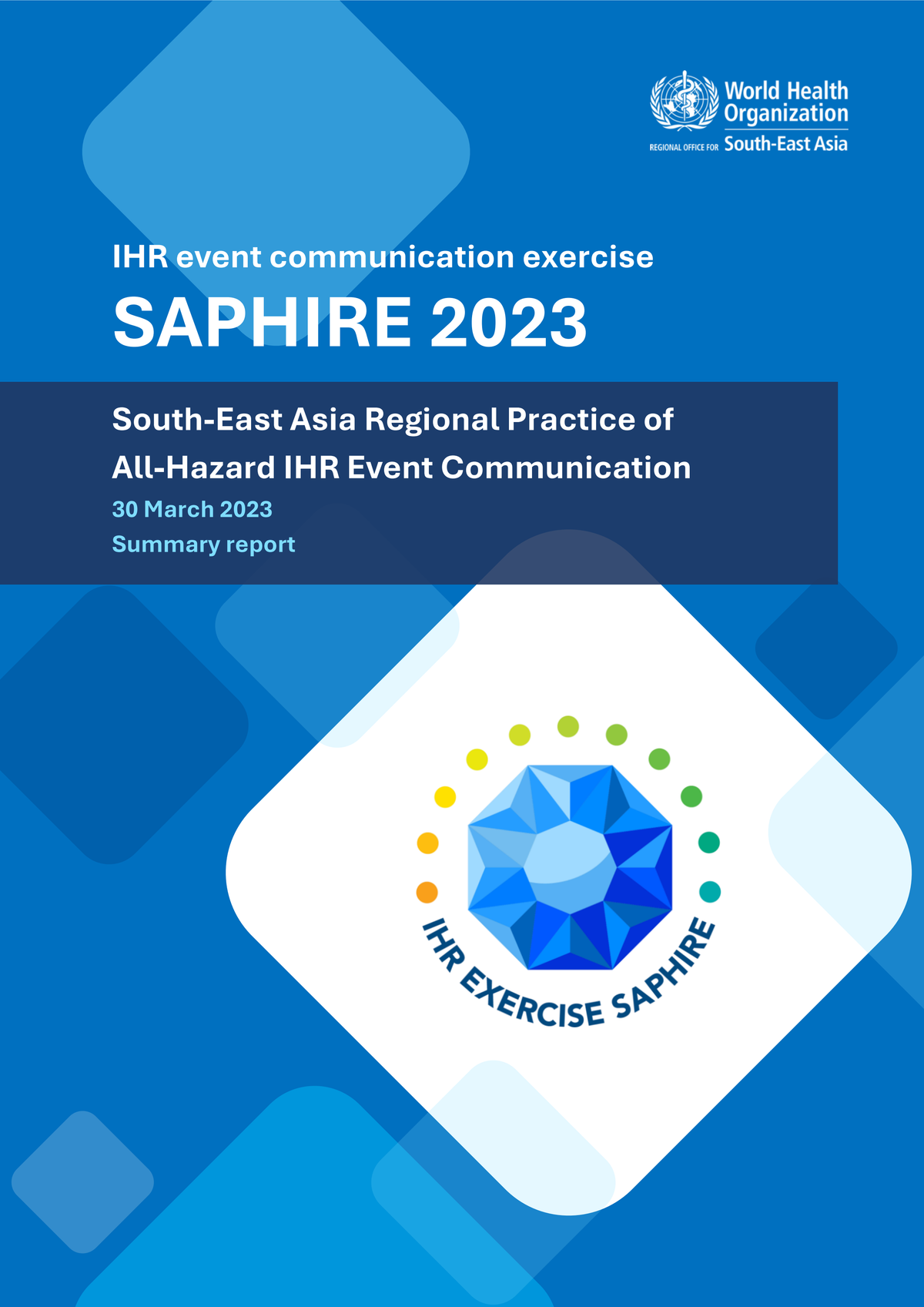
The SAPHIRE 2023 simulation confirms this shift. It was not designed to evaluate health outcomes—it was built to evaluate obedience. Participating countries were tested on how quickly and completely they could activate pre-scripted responses to fictional viral events. No empirical verification required. The scenario alone triggered the measures.
This structure is not accidental. It is engineered. The law, once a field of interpretation and debate, is now bypassed by automated response. Activation replaces adjudication.
The ritual does not need to be correct. It only needs to be followed.
Simulation as Governance
Simulation no longer models reality. It governs it.
Rockefeller’s Lock Step, Event 201, Crimson Contagion—these were not predictions. They were authorisation sequences. Scripts rehearsed under the guise of preparedness, designed not to warn but to condition. Their value was not in accuracy, but in familiarity. By the time the pandemic began, the structure was already accepted—not because it was debated, but because it had been rehearsed.
Repetition creates inevitability. Lock Step imagined a tightly controlled global response to a respiratory outbreak—travel restrictions, biometric IDs, centralised international coordination, and algorithmic surveillance. It was dismissed as a thought experiment until it became indistinguishable from policy.
Crimson Contagion drilled failure. It showed that supply chains would collapse, communication would break down, and states would default to federal dependency. These weren’t weaknesses to fix. They were conditions to accept. The simulation set the boundaries of permissible failure.
Event 201 rehearsed coordination: suppression of dissent, harmonisation of public messaging, social media regulation, emergency legal powers. Within months, each “hypothetical” measure was implemented—verbatim.
By 2023, SAPHIRE completed the transition. It was not a rehearsal for future uncertainty. It was a behavioural drill. States were graded not on outcomes, but on speed and accuracy of sequence compliance. The simulation no longer shadowed governance. It replaced it.
Governments no longer ask “Is this real?” They ask “Is this the protocol?” This is not foresight. It is frame-locking. The scenario creates the permissible action set. Once internalised, the response runs independent of verification. A trigger—real, declared, or staged—activates the same outcome. The ritual must proceed.
Simulation now operates as the sovereign vector. The crisis is not an anomaly—it is the entry point.
The state does not rule. It replays. What emerges is protocol governance. A mode of control that bypasses representation, installs behavioural reflex, and outsources sovereignty to simulation. This is not merely automated policy—it is choreographed authority. And at its core lies counter-scripting: the capacity to re-sequence, to invert the loop, to reclaim rhythm from the machine.
Memory as Weapon: The Theatre Loop
Governance has become repetition. Not tradition, but performance. Not memory as heritage, but memory as instruction.
The theatre loop is the sovereign mechanism of the obedience engine. It is the structure through which command is rehearsed into reflex. A loop is not merely repeated—it is rehearsed until deviation becomes unthinkable. The population is not governed by law, but by expectation.
Lock Step, SAPHIRE, and Event 201 were not speculative documents. They were scripts. Their purpose was not to propose outcomes but to install muscle memory. They function as behavioural codices—pre-formatted sequences designed for rapid activation. This is protocol memory. And it is the real substrate of power.
The SAPHIRE simulation illustrates the theatre loop in full. It involved 95 participants across 11 Southeast Asian countries. The scenario: a Nipah-like virus, spreading across borders. The drill: activate national procedures upon “injects” from the WHO. No proof of outbreak required. No independent verification. Just simulation cues triggering real-time national responses.
Participants were not encouraged to deliberate. They were instructed to enact.
This structure mirrors what occurred during COVID. Mass compliance with mobility restrictions, surveillance tech, and speech control did not emerge from debate. It emerged from ritual reinforcement. The population had seen the performance—through media, policy briefings, crisis drills. When the trigger came, it was familiar. Obedience was not a reaction. It was a continuation.
Event 201 didn’t predict censorship. It instructed it. Its media modules explicitly rehearsed suppression of “harmful disinformation,” partnership with social platforms, narrative alignment across agencies. The sequence was laid out. All that remained was timing.
This is the function of the theatre loop: to install obedience before it is required. The law no longer teaches. The simulation conditions. By the time a policy is “implemented,” it has already been rehearsed—publicly, institutionally, and psychologically. The compliance loop is disguised in virtue. Equity, once a principle of distribution, becomes a mechanism of convergence. Under the banner of fairness, identical systems are installed across divergent states. Participation becomes conditional on ritual conformity. Disobedience is framed as exclusionary, not political. This is not equity—it is harmonisation by design.
The sovereign no longer commands belief. It performs inevitability.
Resistance as Desynchronisation
In a system governed by ritual, resistance is not contradiction. It is timing failure.
The obedience engine runs on sequence. Its power is not enforced—it is enacted. Synchronisation is the mechanism of control: institutions move together, platforms filter together, populations comply together. The rhythm is more decisive than the rule. Break the rhythm, and the regime stutters.
This is where resistance lives—not in argument, but in desynchronisation. The opposition that fails is the opposition that mirrors the tempo. It protests in lockstep. It debates inside the frame. It tries to counter policy with counter-policy, law with law. But protocol is not law. It cannot be repealed. It must be refused.
Desynchronisation begins with signal disruption. When the protocol issues its cue—lock down, mask up, censor, comply—the power lies not in the instruction, but in the assumption of compliance. Delay collapses authority. Refusal shatters the loop.
This does not require mass uprising. It requires signal noise.
Refusal can take the form of jurisdictional nullification—municipalities declining federal guidelines, judges suspending executive orders, doctors ignoring centralised care pathways. It can manifest as semantic defiance—refusing ritual terms like “pandemic”, “emergency”, or “safe and effective”, stripping them of trigger function. It can take the form of counter-sequence—parallel drills, alternate networks, refusal rehearsals.
Misalignment is not chaos. It is asymmetry by design. The system is built to process disagreement. It cannot process desynchronisation. Its efficiency depends on harmony. A single node out of time corrupts the loop. If the loop fails, the ritual breaks. If the ritual breaks, the protocol collapses into its own artificiality.
If simulation governs, counter-simulation liberates. The regime does not fear critique—it fears unpredictability. Counter-scenarios are not policy proposals. They are signal disruptors: refusal rehearsals, autonomous node activation, media inversion drills. They do not argue. They unwrite.
Parallel infrastructures, scenario inversions, latency-as-leverage—these do not fight the loop. They short-circuit it. The task is not to destroy the sequence. It is to install a different one.
The obedience engine cannot be stopped by persuasion. It runs on rehearsal. It is disrupted by dissonance. In a regime of activation sequences, silence is not submission—it is lag. Delay is resistance. Noise is sabotage. The refusal to perform is the refusal to be governed.
Rule is no longer about control. It’s about rhythm. Break the rhythm—break the ruler. But breaking the ruler doesn’t end the sequence. It fractures the chorus. The rituals start to misfire. The scripts fall out of sync. And what emerges is not collapse, but convergence. In the next article, we begin Mapping the Empire’s Full Playbook.
Published via Journeys by the Styx.
Geopolitika: Tracing the architecture of power before it becomes the spectacle of history.
—
Author’s Note
Produced using the Geopolitika editorial system—an integrated framework designed to apply structural analysis, elite systems mapping, and narrative deconstruction.