Nations Under Attack (Part 5): Resistance — Revised
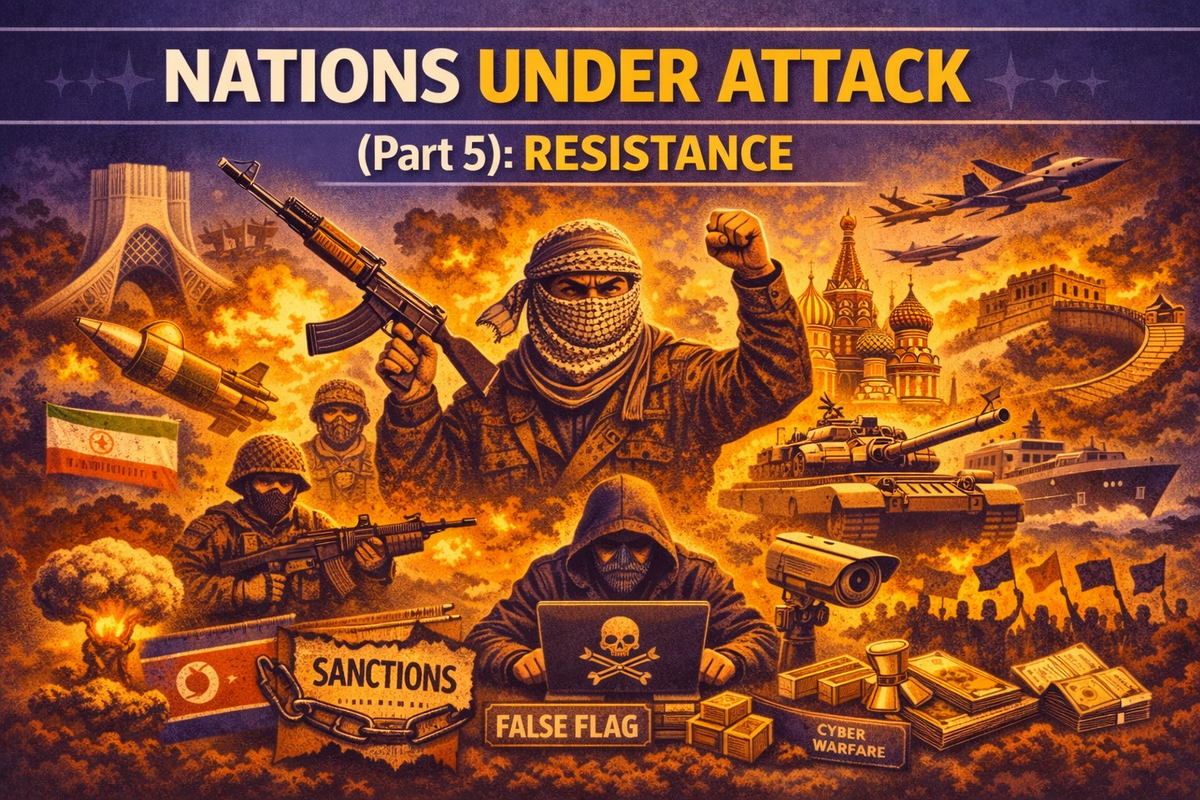
This article, first published in December 2023 as Part 5 of the Nations Under Attack series, has been revised and condensed for this March 2026 repost. It closes the arc of the series by shifting focus from the empire’s methods of attack—elite drivers, the US War Machine’s regime-change toolkit, narrative warfare and recycled propaganda templates—to the practical question of resistance: how targeted states attempt to survive, adapt and sometimes prevail under sustained hybrid warfare.
Three years on, the urgency is obvious. Operation Epic Fury, launched on 28 February 2026 with the assassination of Iran’s Supreme Leader Ali Khamenei and thousands of “precision” strikes on infrastructure and nuclear facilities, has activated the full playbook examined earlier in the series: demonised leadership, humanitarian gloss over civilian suffering, existential-threat rhetoric and modular propaganda scripts designed to delegitimise the target while manufacturing consent for escalation. The war unfolds simultaneously across military, economic, informational and cultural domains.
What has become clearer since 2023 is the layered nature of power. On the surface we see national rivalries and moral binaries; beneath them operate transnational systems of control—surveillance architectures, digital finance, behavioural influence—replicated across geopolitical blocs even as the theatre of “us versus them” divides public perception. Resistance therefore rarely appears as heroic purity. It is survival under siege: asymmetrical, costly, morally ambiguous and often accompanied by measures that restrict liberties or harden state authority.
Nothing here seeks to sanctify any leader or excuse abuses. The aim is pattern recognition. The same narrative templates—evil tyrant, terror sponsor, human-rights monster, existential threat—recur across targets regardless of ideology or geography. Once those scripts are established, they help create the political space in which pressure, coercion and ultimately war can be justified.
The seven pressure points examined here—propaganda and media control, economic warfare, the arms race, terrorism, false-flag accusations, military conquest and civil-cultural subversion—show how targeted states attempt to preserve strategic space long enough to avoid collapse. Whether that collapse is justified is not the issue. The point is that the war machine operates according to its own internal logic—and that logic has seldom, if ever, delivered the humanitarianism, democracy or freedom in whose name its campaigns are launched.
In March 2026, as Iran absorbs the opening shock of Epic Fury while drawing on many of these resilience strategies, the central premise of this series remains unchanged: where organised imperial pressure exists organised resistance inevitably follows.
22 December 2023
“Where there is power, there is resistance.”
— Michel Foucault
Part 1 of this series argues that elites aggressively seek to acquire and control resources and power—primarily for their own personal enrichment. Part 2 outlines how the Western elites enact this agenda against nations that are targeted for resource pillage and inclusion within the broader sphere of Western influence for ongoing power projection and exploitation. Part 3 deals with narrative as a tool of war. Part 4 provides an overview of the common propaganda narratives used against key targets of the empire.
This Part 5 article provides an overview of how some target nations have sought to counter the various methods of disruption and conquest used by the US War Machine. It deals with state actions and responses that are or can be credibly construed as being designed to preserve the territorial, economic and social integrity of a state in the face of unfriendly actions drawn from the US War Machine’s toolkit.
Introduction
While repressive actions tend to shock us, the motivations for ostensibly repressive or harsh measures and actions enacted by the government of a targeted nation need to be taken into account. Have these been instituted merely to benefit elite power interests (either domestic or foreign) by eliminating internal dissidents and opposition parties or are they a response to unfriendly external forces directed against the nation and its people? The actions target governments take in response to such tactics are often portrayed as repression of freedoms and even as crimes against humanity, these tactics are also designed to elicit reactions that can be used for propaganda purposes in support of further acts of aggression.
For instance, as Dr Tim Anderson notes in The Dirty War on Syria, the early protests in the southern city of Daraa—initially relatively orderly demonstrations linked in part to the economic stresses caused by a prolonged drought—were soon disrupted by unknown snipers who fired on both police and protesters. The killings hardened attitudes on both sides. As tensions escalated, Syrian police—now armed and expecting violence—responded more forcefully, which in turn led to rising civilian casualties. These harsher security responses were quickly framed internationally as evidence of a regime brutally suppressing peaceful protest. That narrative then provided the justification for the United States and its allies to begin supplying arms and support to so-called “moderate” opposition groups fighting the Syrian government, while simultaneously imposing successive rounds of economic sanctions designed to isolate and weaken Damascus. In effect, a familiar hybrid-warfare cycle took hold: provocation, crackdown, narrative amplification, sanctions, and finally external militarisation—each stage reinforcing the next.
Countering the US War Machine
This section explores some of the strategies targeted nations have employed to counter the US War Machine’s key tactics, specifically: Propaganda & Media Control; Economic Warfare; Arms Race; Terrorism; False Flag Actions; Military Conquest; and Civil & Cultural Subversion.
A. Propaganda & Media Control
Targeted nations have attempted to counter Western propaganda dominance by building their own media ecosystems and using social media to disseminate alternative narratives. These initiatives are often aimed both at domestic audiences, who may be influenced by Western narratives and foreign audiences, particularly in the United States, Europe and the Global South. While governments of targeted nations sometimes attempt to challenge censorship in Western media environments, their efforts are often better directed at countering the effects of Western propaganda on their own populations and expatriate communities.
Russia
The Russian government has sought to counter Western propaganda and disinformation initiatives through a combination of diplomacy, state media and alternative digital platforms. Senior officials such as Foreign Minister Sergey Lavrov and Foreign Ministry spokesperson Maria Zakharova maintain active social media profiles and frequently use press conferences and online messaging to articulate Russia’s position on global affairs. Russian embassies and consular offices likewise maintain active presences on platforms such as Telegram, X (formerly Twitter) and Facebook.
Alongside diplomatic messaging, Russia established global media outlets such as RT and Sputnik News to present a Russian perspective on domestic and international developments. To reduce dependence on Western technology platforms, Russia has also encouraged domestic alternatives including Telegram, the VK social network (formerly VKontakte) and the Yandex ecosystem, which provides search, mapping, video and email services similar to those offered by Google.
RT in particular attempted to reach Western audiences by employing English-speaking commentators drawn from across the political spectrum. Former RT presenter Abby Martin noted:
“I was interviewed about my on-air statement on many major news stations, from BBC to CNN, where I defended my editorial freedom and also called-out the double standards and hypocrisies in their coverage. RT issued an official statement in support of my freedom to state my opinion on the network.”
— Abby Martin, Telesur, 8 January 2017
Programs such as CrossTalk (Peter Lavelle), Going Underground (Afshin Rattansi) and Direct Impact (Rick Sanchez) were designed to provide alternative commentary on Western policy and media narratives. Despite persistent claims about the influence of Russian propaganda, RT’s measurable impact in Britain appears to have been relatively modest. Reporting in the New York Times indicated average weekly viewership of about 643,000 viewers out of a total television audience of 55.2 million or roughly 1.08 percent.
Nevertheless, US officials have acknowledged the broader reach of Russian-aligned media in other regions. General Laura Richardson, commander of United States Southern Command, warned that Russian and allied networks collectively command over 31 million followers in Latin America, describing the situation as a conflict in the “information domain.”
Russia has also responded to Western bans on RT and Sputnik by tightening regulation of Western media outlets operating inside Russia. Following the introduction of laws criminalising the spread of “false information” about Russian military operations organisations such as Radio Free Europe/Radio Liberty (both US State associated) suspended operations in the country. Journalists including Evan Gershkovich and Alsu Kurmasheva were detained under espionage or foreign-agent legislation. Western governments and media have portrayed these actions as evidence of authoritarian repression of free speech.
At the same time, Russia has become a base for a number of Western alternative journalists—including Eva Bartlett, Patrick Lancaster and others—who report from the Russian side of the Ukraine conflict and the Donbass region. Their work aims to humanise the Russian perspective and challenge the dominant Western narrative, although it has frequently resulted in legal or political repercussions in their home countries.
Despite persistent claims about the scale of Russian propaganda operations—such as the RAND Corporation’s “firehose of falsehood” model—the real influence of Russian media remains contested with actual audience numbers being insignificant in the larger media landscape. Critics argue that the narrative of overwhelming Russian information warfare has itself been amplified within Western politics as a justification for censorship, sanctions and tighter control over media ecosystems.
Syria
During the Syrian conflict the Damascus government sought to counter Western narratives portraying it as solely responsible for the country’s devastation through a combination of media engagement, diplomacy and international outreach.
One approach was facilitating access for sympathetic foreign journalists and researchers. Reporters and commentators such as Eva Bartlett, Vanessa Beeley, Mark Taliano and Dr Tim Anderson were permitted to visit Syria and document conditions from the government-controlled side of the conflict. Their reporting provided an alternative perspective on the war, particularly regarding the role of Western-backed insurgent groups. However, these figures frequently came under attack from Western media and institutional projects such as EUvsDisinfo, while journalists such as former Guardian Middle East editor Brian Whitaker publicly criticised their work.
The Syrian government also used social media platforms such as Twitter and Facebook to disseminate official statements, battlefield updates and diplomatic messaging. These campaigns were intended to counter what Damascus characterised as misinformation spread by Western governments and media. At the same time, pro-Syrian accounts and narratives were often reported to have been restricted or removed by Western platforms.
Another tactic involved hosting foreign delegations of politicians, journalists and activists to observe conditions on the ground and challenge the prevailing Western narrative of the conflict. Syrian officials also participated in a range of international forums—including meetings in Moscow and Kazan—to present their interpretation of events and appeal for diplomatic support.
Diplomatically, Syria’s position was initially weakened by defections and international isolation. Western governments imposed extensive sanctions and the United States formally designated Syria a state sponsor of terrorism, while regional powers such as Turkey, Saudi Arabia, Jordan and Qatar supported opposition forces. However, diplomatic efforts by Russia, the United Arab Emirates and China gradually shifted the regional environment. By early 2023, a broader geopolitical realignment—symbolised by the Chinese-brokered rapprochement between Saudi Arabia and Iran—helped pave the way for renewed diplomatic engagement, including plans to reopen embassies between Riyadh and Damascus after more than a decade of hostility.
Despite these initiatives, Western governments and media largely maintained a dominant narrative portraying the Syrian government as an authoritarian regime responsible for war crimes and humanitarian catastrophe. As a result, Syria remained subject to heavy sanctions and diplomatic isolation even as it gradually regained control over most of its territory. Large areas of the country—including some of its most fertile agricultural land and key oil-producing regions—remain outside Damascus’s control under the influence of insurgent forces and the military presences of the United States and Turkey.
B. Economic Warfare
Targeted nations have invested in infrastructure, forged alternative alliances and diversified their economies in an effort to resist the economic warfare tactics deployed by the US War Machine. These measures are designed to mitigate sanctions, reduce dependence on Western financial systems and maintain economic resilience under sustained external pressure.
Russia
Sanctions, trade embargoes and financial restrictions have been central tools used by the US and its allies against Russia. These measures aim to pressure Moscow to alter its behaviour in areas such as cybersecurity, human rights and foreign policy while restricting Russia’s access to global markets and financial networks. Financial sanctions in particular were designed to limit Russia’s ability to move funds through international banking systems.
In response, the Russian government embarked on a long-term program aimed at insulating its economy from external coercion. Key elements of this strategy include:
- Expanding trade with non-Western partners. Russia has deepened economic ties with countries such as China, India and Turkey, providing alternative markets and investment flows. Trade with China in particular has expanded rapidly. In 2022 bilateral trade rose by 29.3% to US$190.27 billion, with Chinese exports to Russia increasing to US$76.12 billion and Russian exports to China reaching US$114.15 billion.
- Building alternative financial institutions. Russia has supported institutions such as the Eurasian Development Bank and the BRICS New Development Bank as alternatives to Western-dominated financial systems.
- Import substitution. Moscow has promoted domestic industry and agriculture to reduce dependence on Western imports, particularly in critical sectors such as food production and manufacturing.
- Developing alternatives to SWIFT. Russia established the Financial Messaging System of the Bank of Russia (FMSBR) to reduce reliance on the Western-controlled SWIFT financial messaging network.
- Currency diversification and de-dollarisation. Russia has expanded the use of the yuan, euro and ruble in international trade while gradually replacing dollar-denominated debt with liabilities issued in other currencies.
- Rebalancing national reserves. Russia has shifted reserves away from US dollar assets and toward gold and alternative currencies. By early 2023 the country held roughly US$582 billion in gold and foreign exchange reserves, placing it among the world’s largest reserve holders.
- Energy payments in rubles. Moscow has required certain “unfriendly” countries to purchase Russian oil and gas using rubles, reinforcing demand for its national currency.
The sweeping sanctions introduced after Russia’s 2022 military intervention in Ukraine were intended to cripple the Russian economy and weaken President Vladimir Putin’s political base. Early Western predictions suggested that the Russian economy would rapidly collapse. For example, the EU’s foreign policy chief warned in mid-2022 that Russia would eventually “crumble” under the sanctions regime.
In practice, the outcome has been more mixed. By late 2022, even outlets such as NPR acknowledged that despite unprecedented sanctions “Russia’s economy is still functioning.” Bloomberg similarly reported in early 2023 that Russia had “survived a year of sanctions by investing as never before.” While Russia’s GDP contracted by around 2.2% in 2022, the International Monetary Fund later projected modest recovery, with growth returning in subsequent years.
Although sanctions have undoubtedly constrained economic growth and reduced access to Western technology and finance, Russia’s long-term efforts to diversify trade and financial systems appear to have mitigated some of their intended impact.
Syria
Syria has faced a similar, though far more severe, form of economic warfare. US and European sanctions effectively prohibit most non-humanitarian trade with Syria. The Caesar Syria Civilian Protection Act, implemented in 2020, introduced sweeping secondary sanctions aimed at deterring third countries from engaging economically with Damascus.
Official US policy objectives include punishing Syria for alleged support of terrorism, responding to human-rights abuses during the civil war, limiting ties with Iran and pressuring the Syrian government to return to UN-led negotiations.
In practical terms, sanctions have restricted Syria’s access to global financial networks and significantly limited its ability to export commodities or obtain foreign investment. These measures have contributed to a deep humanitarian crisis. Essential goods such as food, medicine and fuel have become increasingly scarce and expensive, while infrastructure damaged during years of conflict has proven difficult to rebuild.
The Syrian government has attempted to mitigate these pressures through several strategies:
- Strengthening economic ties with Russia, Iran and China, which have provided financial support, investment and trade opportunities.
- Encouraging domestic production to reduce dependence on imports and maintain basic economic activity.
- Circumventing sanctions through alternative financial mechanisms, including barter arrangements, informal trade networks and—reportedly in some cases—cryptocurrencies.
- Diplomatic engagement aimed at easing sanctions and restoring regional relations.
These measures have only partially alleviated Syria’s economic crisis. Sanctions have severely limited the government’s ability to rebuild infrastructure or attract foreign investment and the burden of economic hardship has fallen disproportionately on the civilian population. Conditions deteriorated further following the devastating earthquakes that struck Turkey and northern Syria in early 2023. In response, the United States announced a temporary 180-day sanctions exemption to facilitate humanitarian aid.
Despite these limited adjustments, Syria remains in an extremely fragile economic position. Food shortages, unstable water supplies, energy scarcity and recurring disease outbreaks continue to strain the population. More than 15 million Syrians rely on humanitarian assistance and roughly 90 percent of the population is estimated to be living in poverty.
C. Arms Race
Many targeted states have invested heavily in defence capabilities and strategic alliances in an effort to counter the military superiority of the US War Machine. Rather than attempting to match American military spending directly, these states typically seek asymmetric advantages—leveraging domestic industrial capacity, technological innovation and strategic geography to offset the scale of the US military-industrial complex. Their success in doing so depends on factors such as economic resources, industrial capability, military tradition, alliances, political cohesion and the ability to limit corruption and elite fragmentation. Iran and Russia illustrate two different approaches adopted by states occupying distinct positions within the global power hierarchy.
Iran
Since the 1979 revolution, Iran has pursued a range of strategies designed to counter the superior military capabilities of the United States and its regional allies.
- Nuclear program: Iran maintains that its nuclear research program is intended for peaceful purposes and points to a religious ruling (fatwa) issued by Ayatollah Khamenei prohibiting nuclear weapons. Western governments and Israel, however, have long argued that Iran’s program has potential military dimensions. Israeli officials in particular have repeatedly alleged that Tehran has pursued clandestine weapons development, accusations often accompanied by covert operations against Iranian facilities and personnel, including cyber attacks, assassinations and sabotage.
Although Iran denies seeking nuclear weapons, the technological capability to develop them has created strategic ambiguity. This ambiguity has played a role in diplomatic negotiations such as the Joint Comprehensive Plan of Action (JCPOA), while also serving as a form of deterrence against direct military attack. - Regional proxy influence: Iran has cultivated long-standing relationships with non-state actors across the Middle East, including Hezbollah in Lebanon and allied militias in Iraq and Syria. These partnerships extend Iran’s influence across the region and complicate the strategic calculations of its adversaries. Analysts frequently note that such networks provide Tehran with both political leverage and military deterrence across multiple theatres.
- Ballistic missiles and drones: Iran has developed an extensive missile program centred on conventional warheads, which functions both as a deterrent and as a means of projecting power. The accuracy of these systems was demonstrated after the 2020 US assassination of Iranian General Qasem Soleimani, when Iranian Zolfaghar missiles struck US facilities at Ayn al-Asad airbase in Iraq with considerable precision.
Alongside its missile program, Iran has become a major developer of military drones. Iranian UAV development dates back to the 1980s and has expanded significantly in recent years. By the 2010s Iranian drones were reportedly being supplied to regional allies such as Hezbollah and the Syrian government. More recently, reports suggest that Iranian drone technology has been shared with Russia during the Ukraine conflict, with some Western analysts describing Iran as a leading producer of relatively low-cost combat drones. - Cyber warfare: Following the Stuxnet cyber attack on Iranian nuclear facilities in 2010, Tehran reportedly expanded its own cyber capabilities. Iranian cyber operations are often characterised as part of a broader “soft war” strategy—using non-kinetic tools such as cyber attacks and information operations to exert pressure on adversaries while avoiding direct confrontation.
- Asymmetric naval warfare: Iran has also developed capabilities designed to exploit the geographic constraints of the Persian Gulf. Naval mines, small attack craft, anti-ship missiles and miniature submarines provide relatively low-cost tools capable of threatening larger naval forces and commercial shipping routes.
- Domestic defence industry: Decades of sanctions have encouraged Iran to expand its domestic military-industrial base. Since the early 1990s the country has produced a wide range of military equipment, including missiles, drones, armoured vehicles, naval vessels and radar systems. This emphasis on self-reliance reflects a longer historical trend: even under the Shah, Iran invested heavily in domestic military production in an effort to build one of the most capable armed forces in the region.
Russia
Modern Russian military capabilities rest on foundations established during the Cold War, when the Soviet Union built an advanced industrial and scientific base to compete with the United States. Soviet investment produced sophisticated missile systems, layered air defence networks and a powerful submarine fleet. By the 1960s the USSR had already deployed nuclear-powered submarines and strategic missile forces capable of rivaling American capabilities.
Following the collapse of the Soviet Union, Russia’s military capacity declined significantly during the 1990s. However, after Vladimir Putin returned to the presidency in 2012, the Russian government initiated an extensive modernisation program. Partly motivated by the US withdrawal from the Anti-Ballistic Missile Treaty in 2001, this program focused on developing advanced weapons designed to counter US technological advantages.
- Military modernisation: Russia has introduced new systems including the S-400 air defence network, the Armata tank and the Kinzhal hypersonic missile. It has also modernised its nuclear arsenal through new intercontinental ballistic missiles such as the Sarmat and the Avangard hypersonic boost-glide vehicle.
- Anti-Access/Area Denial (A2/AD): A key element of Russian strategy is the development of integrated defence zones intended to restrict Western military operations near its borders. These systems combine advanced surface-to-air missiles, anti-ship missiles and electronic warfare capabilities.
- Cyber and electronic warfare: Russia has invested heavily in cyber operations and electronic warfare systems capable of disrupting communications, satellites and guided weapons. Such capabilities have become an important component of modern Russian military doctrine.
- Regional influence and alliances: Russia also seeks to maintain influence in neighbouring regions through military intervention, political alliances and security organisations such as the Shanghai Cooperation Organisation and BRICS. In recent years Moscow has provided security support to countries including Venezuela, the Central African Republic and Niger, while deepening military cooperation with Iran.
- Arms control diplomacy: Despite ongoing tensions, Russia continues to engage in arms control negotiations. However, several key treaties—including the ABM Treaty, INF Treaty and Open Skies Treaty—have collapsed following US withdrawal. In 2023 Russia suspended participation in the New START treaty, arguing that meaningful arms control is impossible under what it describes as hostile US policies.
- Domestic defence industry and space capabilities: Russia has prioritised domestic weapons production to reduce dependence on foreign technology and mitigate sanctions. Its military-industrial complex continues to produce advanced aircraft, missile systems and submarines while exporting arms to numerous countries.
In addition, Russia retains significant space capabilities. The GLONASS satellite navigation system provides an alternative to the US GPS network, while Russia has long remained a major launch provider for international space missions.
D. Terrorism
Targeted nations have sought to counter terrorism by developing counter-terrorism strategies, strengthening internal security institutions and forming alliances with other states to combat militant networks. In many cases, governments facing insurgency or proxy warfare frame these conflicts as part of a broader international struggle against terrorism, particularly when armed groups receive external support or operate across borders.
Syria
Since the outbreak of the Syrian conflict in 2011, the Syrian government has consistently characterised the armed opposition fighting against it as terrorist organisations supported by foreign powers. Damascus argues that groups such as ISIS, al-Qaeda affiliates and various Islamist militias formed the core of the insurgency, transforming what began as political unrest into an externally backed war.
Speaking at the United Nations General Assembly, Syrian Foreign Minister Fayssal Mekdad described Syria as “one of the countries most affected by that scourge” and affirmed that the Syrian state would continue its fight against terrorism until “state authority, security and stability are restored.”
Faced with a rapidly escalating insurgency and economic sanctions, Syria sought military assistance from Russia. At the request of the Syrian government, Russia launched a military intervention in September 2015 aimed primarily at targeting militant organisations including ISIS and al-Qaeda affiliates. Russian airpower, intelligence support and military equipment significantly strengthened the Syrian government’s position on the battlefield. Syrian forces also received training and logistical support from Russian military advisers.
In parallel with military operations, Russia participated in diplomatic initiatives aimed at resolving the conflict. One of the most significant was the Astana process, involving Russia, Iran and Turkey as guarantors of cease-fire agreements and de-escalation zones within Syria. Moscow also played an active role in negotiations conducted through the United Nations.
Despite these efforts, Western governments and media outlets frequently portrayed Russia’s involvement as geopolitical opportunism rather than counter-terrorism. Media commentary often questioned Moscow’s motives, with headlines such as “The Real Reason Russia Is Helping Syria” (Time, 2015) and “Russia’s Payback Will Be Syria’s Reconstruction Money” (Foreign Policy, 2019). Such narratives reinforced broader Western accusations that the Syrian government bore primary responsibility for the humanitarian catastrophe created by the war.
Iran
Iran has also faced persistent security challenges from militant organisations and opposition groups, particularly the People’s Mujahedin of Iran (MEK). The MEK was designated a terrorist organisation by the United States in 1997 but was removed from that list in 2012. The group has a long history of conflict with the Iranian state, including cooperation with Saddam Hussein during the Iran-Iraq War.
Tehran maintains that the MEK continues to operate as a hostile militant organisation supported by foreign governments. In response, the Iranian government has adopted a range of measures intended to undermine the group’s influence and disrupt its activities.
These measures include:
- Propaganda and media campaigns portraying the MEK as a terrorist cult and emphasising its historical record of violence.
- Diplomatic pressure urging foreign governments to restrict the group’s activities and reconsider its legal status.
- Security operations, including alleged attempts to disrupt MEK networks through arrests, intelligence activity and surveillance.
- Legal action, such as indictments issued against MEK leadership and requests for the extradition of members located abroad.
- Intelligence infiltration aimed at gathering information on the organisation’s structure and operations.
While Iran portrays these actions as legitimate counter-terrorism measures, critics often characterise them as efforts to suppress political opposition. The dispute illustrates the broader challenge of distinguishing between militant insurgency and political dissent within highly polarised geopolitical conflicts.
China
China has likewise framed security operations in its western Xinjiang region as a response to terrorism and separatism. Chinese officials have accused foreign actors—including the United States—of encouraging instability in the region by supporting separatist groups.
According to statements from the Chinese Foreign Ministry, extremist networks have sought to exploit ethnic tensions in Xinjiang to promote separatism and disrupt China’s strategic access to Central Asian energy routes. Chinese officials have occasionally cited claims that foreign intelligence services supported militant activity in the region, although such allegations remain contested.
Several violent incidents during the late 2000s and early 2010s were cited by Beijing as justification for expanded counter-terrorism measures.
These included:
- 2009 Urumqi riots, which resulted in nearly 200 deaths following clashes between Han Chinese and Uyghur residents.
- 2013 Tiananmen Square vehicle attack, in which a car drove into crowds near Beijing’s central square.
- 2014 Kunming train station attack, where knife-wielding assailants killed 31 people and injured more than 140.
- 2015 Kashgar attacks, involving coordinated assaults using knives and explosives.
- 2019 attack on a police checkpoint in southern Xinjiang, resulting in multiple casualties.
In response, the Chinese government introduced extensive security measures throughout Xinjiang. These policies included expanded police presence, widespread surveillance systems, restrictions on religious and cultural practices and the establishment of detention facilities described by authorities as vocational training centres aimed at deradicalisation.
These measures have attracted significant criticism from Western governments, media organisations and human-rights groups. Critics argue that China’s policies constitute mass surveillance, repression of ethnic minorities and the operation of large-scale internment camps. Some analysts and advocacy groups have even characterised the policies as a form of cultural genocide.
Chinese authorities reject these accusations, maintaining that their policies represent necessary counter-terrorism measures designed to prevent extremism, maintain social stability and protect a strategically vital frontier region.
E. False Flag Actions
Targeted states frequently attempt to deter or neutralise alleged false flag operations by exposing them publicly and highlighting what they see as the hypocrisy of the US War Machine. By drawing attention to inconsistencies in official narratives and demanding independent investigation, these governments seek to prevent incidents from being rapidly weaponised to justify sanctions, military strikes or diplomatic isolation.
Syria
During the Syrian conflict, the Syrian and Russian governments repeatedly warned that militant organisations linked to al-Qaeda might stage chemical incidents in order to implicate the Syrian government and provoke foreign military intervention. Syrian officials have pointed to earlier instances in which insurgent groups allegedly used chemical agents while attributing the attacks to government forces.
One of the most prominent cases involved allegations that the Syrian government used chemical weapons in Douma in April 2018. Damascus rejected the accusation and claimed the incident had been staged by the militant group Jaish al-Islam, possibly with the assistance of Western intelligence agencies. Before an independent investigation could be completed, however, the United States, Britain and France launched airstrikes against Syrian government facilities.
The accusations against Damascus were widely supported by Western governments, major media outlets and several NGOs. These included Human Rights Watch, the Syrian American Medical Society (SAMS)—which has received funding through USAID—and the Syrian Civil Defence (White Helmets) organisation, founded by former British intelligence officer James Le Mesurier and supported financially by a number of NATO governments.
Open-source investigative collective Bellingcat, which receives funding from organisations linked to Western governments and think tanks such as the Atlantic Council, also played a significant role in promoting the narrative that the Syrian government had carried out chemical attacks. Critics argue that Bellingcat’s investigations often rely heavily on material supplied by opposition groups operating inside Syria, including militant factions and organisations associated with them.
The Organisation for the Prohibition of Chemical Weapons (OPCW) later released a report supporting the conclusion that chemical agents had been used. However, controversy surrounding the investigation continued after several OPCW insiders raised concerns about how evidence from the Douma investigation had been handled. Among them was former OPCW engineering specialist Ian Henderson, who told the UN Security Council in January 2020 that key findings from the original investigation had been suppressed. Journalists such as Aaron Maté of The Grayzone later argued that the OPCW had failed to address these internal disputes adequately.
Despite these controversies, Western governments and media organisations largely maintained the conclusion that the Syrian government had been responsible for chemical attacks. The resulting narrative contributed to further sanctions, diplomatic isolation and military action against the Syrian state.
Russia
Russia has also argued that a number of high-profile incidents attributed to Moscow form part of a broader campaign of political and media warfare designed to isolate the country internationally. Russian officials and sympathetic commentators have suggested that some of these events may represent false flag operations or manipulated narratives intended to justify sanctions and geopolitical pressure.
Among the most frequently cited cases are the poisoning of Alexander Litvinenko in London, the 2018 Skripal poisoning in Salisbury, the downing of Malaysia Airlines flight MH17 over eastern Ukraine, the alleged poisoning of opposition figure Alexei Navalny, the sabotage of the Nord Stream gas pipelines and accusations of Russian interference in Western elections.
The Russian government has consistently denied responsibility for these incidents, arguing that the investigations conducted by Western governments and allied organisations have been politically motivated. Critics of the official Western narratives have pointed to inconsistencies in the evidence and have accused intelligence agencies and media organisations of prematurely and, perhaps, disingenuously assigning blame.
Some commentators have linked these narratives to initiatives such as the Integrity Initiative, a British government-funded information project intended to counter Russian influence in Western media and political systems. Critics argue that such initiatives illustrate how information warfare campaigns can shape public perception and policy responses long before investigations are complete.
Whatever the merits of these competing claims, the political consequences of the incidents have been significant. Following the Skripal poisoning, for example, the United Kingdom expelled 23 Russian diplomats and numerous Western governments followed suit in a coordinated diplomatic response. Similar incidents have repeatedly been used to justify new sanctions and additional restrictions on Russia.
During the first year of the Ukraine conflict, Russia also warned that Ukrainian forces might attempt to stage a “dirty bomb” incident in order to blame Moscow and escalate international involvement in the war. Russian Defence Minister Sergei Shoigu raised the issue in a series of calls with defence officials in the United States, Britain, France and Turkey, warning of what Moscow described as a potential provocation involving radioactive material. Ultimately, no such incident occurred with Russian officials later suggesting that the public warning itself may have deterred the alleged plan.
F. Military Conquest
Targeted countries have attempted to stave off military invasion by enhancing their defense capacities and forging alliances with other countries to ward off US and Western aggression. Some have achieved this through intensive spending on military equipment and manpower to fend off possible attackers—Iran has created a robust missile program to serve as a deterrence against any US or Israeli assaults. To improve their defense capabilities, countries have looked to form alliances with other nations—Iran has forged strategic alliances with Russia and China for scientific assistance and military equipment. As well as developing a strong military force and nuclear deterrent capability, North Korea has established close connections with China, which supports the country diplomatically and offers it financial assistance.
Having been invaded, a number of nations have after many years and often at great cost to their people, been able to force the US and allied nations to withdraw. Specific examples of nations that have managed this include:
Iraq
Although though the US was not forced to leave Iraq by the country’s citizens, years of popular opposition to the American military presence put pressure on both the Iraqi and US governments to reach a withdrawal accord. Iraqis were increasingly opposed to the US military presence because they saw it as an occupation rather than a liberation. There were protests and demonstrations in opposition to the US military’s operations in Iraq, notably the mistreatment of detainees at Abu Ghraib and other detention facilities. Under a Status of Forces Agreement (SOFA) signed with the Iraqi government in 2008, the US government agreed to withdraw its troops from Iraqi cities by June 2009 and the entire nation by the end of 2011.
Afghanistan
A variety of circumstances and forces contributed to the US departure from Afghanistan. The circumstances that ultimately resulted in the US pullout from Afghanistan was greatly influenced by the Taliban. They had managed to come together again and wage a persistent insurgency against the Afghan government and its allies, eventually taking over more of the nation. This insurgency undermined the Afghan government’s legitimacy, degraded its security forces and made it harder for the US and its partners to advance their goals in the nation. The US military’s operations, which included drone attacks and night raids, resulted in a substantial number of civilian casualties and sparked intense resentment among Afghans. This rage was made worse by events like US soldiers burning copies of the Quran and a US soldier killing people in Kandahar in 2012. In the end, the war had lost favor with the American people as it continued for more than 20 years with little sign of a resolution, while the price of the battle in terms of human lives lost and financial resources used had become out of hand. The accords the US and Taliban reached in 2020 made it possible for the US to finally remove its troops from Afghanistan.
Vietnam
The Vietcong and the government of North Vietnam both contributed significantly to the US disengagement from Vietnam. The North Vietnamese government employed a range of tactics, including guerilla warfare, using support from peasants, digging tunnel systems and traps and surprise assaults on towns and cities in US-held areas in a protracted fight against the American and South Vietnamese forces. To degrade and harass the enemy while simultaneously gaining the favor of the Vietnamese populace, they used hit-and-run strategies, ambushes and landmines. They transported soldiers, weapons and supplies from the north to the south, using a network of supply routes known as the Ho Chi Minh Trail. The North Vietnamese government also sought to wear down the US’s morale and political will to fight by delaying the struggle and avoiding frontal clashes with the better-equipped US force. The Tet Offensive in 1968 proved that the North Vietnamese and Vietcong forces had not been vanquished and were still capable of mounting massive assaults, which marked a turning point in the war. These pressures brought the US under increasing pressure from its allies and the international community to negotiate a peaceful resolution to the conflict, which led to the signing of the Paris Peace Accords in 1973 and the eventual withdrawal of US troops from Vietnam.
G. Civil & Cultural Subversion
In writing about various defenses against civil and cultural subversion, it must be realised that this is a rather challenging and broad-ranging topic that needs to consider a range of limitations, blind spots and biases an outside observer necessarily has, especially if one has not spent time in the countries concerned or have direct experience through relationships with a resident of the country. Such factors might include lack of cultural context, incomplete information, limited insight into local perspectives, the risk of stereotyping, political sensitivities, language barriers, ethical considerations and the dynamic nature of culture. This is complicated even more by internal politics which when added to historical racial, ethnic and class dynamics of the nations concerned and the overlay of propaganda from both sides can make the whole issue difficult to untangle and particular measures to combat such subversion subject to debate as to necessity and motivation. With this in mind, I propose to deal with the issue of subversion in a separate article.
Nevertheless, it is evident that many targeted nations have worked very hard to combat civil subversion by encouraging social cohesion, building solid, impervious institutions and attempting to address the attack vectors commonly used by the US War Machine to weaken civil and cultural institutions. In brief, these measures include:
- Counterintelligence and cybersecurity: Investment in counterintelligence efforts to detect and prevent foreign espionage and influence operations within the country. Also institute dedicated cybersecurity forces to protect local infrastructure and sensitive data.
- Crackdown on civil society and activism: Close down or limit the operations of Western based civil society organisations and NGOs. Identify and target domestic activists, human rights defenders and dissidents thought to be influenced by such agencies.
- Economic self-reliance: Pursuit of policies to reduce economic dependence on Western countries, such as efforts to bolster domestic industries, establish trade partnerships with non-Western nations and reduce reliance on Western technology and products.
- Education and ideological control: Promotion of ideological conformity by enforcing patriotic education and encouraging loyalty to the government and local indigenous institutions and religious practices.
- Foreign influence and diplomacy: Countering Western influence by building alliances and partnerships with countries that share its interests. Investment in global image and “soft power” diplomacy, promoting national culture, language and media internationally.
- Global media influence: Investments in global media outlets and content production to shape international narratives about the country. Setting up state-backed media organisations, such as CGTN (China Global Television Network), RT and Sputnik Radio to provide an alternative perspectives.
- Legal framework and legislation: Passing laws to address national security concern which grant authorities broad powers to suppress dissent and subversion.
- Media and Content Regulation: Maintain tight control over the media, including newspapers, television and online content. Enforce strict censorship, including blocking or limiting the dissemination of content that challenges the government’s narrative or promotes Western values. Setup Internet censorship and surveillance to restrict access to foreign websites, social media platforms and content deemed subversive. Development and promotion of domestic alternatives to Western social media and communication platforms, such as Weibo, WeChat, Yandex and Telegram.
- Promotion of nationalism and indigenous cultural and religious values: Use anti-American rhetoric and emphasise the importance of national sovereignty to build a sense of unity and resilience against perceived Western subversion while emphasising moral and religious deficits in the Western values as a means to build social cohesion and deflect criticism from foreign influences.
- Regional influence and alliances: Expand influence in the nation’s region through alliances and support for like-minded groups as a way to counter Western interests in the region.
- Support for Pro-Government Movements: Support and fund pro-government and pro-religious movements and organisations to counteract any perceived Western-led efforts to undermine the government.
Overall, the effectiveness of these measures would appear to vary widely. Some nations fail entirely and become victims to regime change operations, while others—such as Syria—are taken to the very brink of collapse before being rescued (by Russia in the case of Syria) and finally take the actions needed to strengthen their nation’s resilience to such attacks. Many of teh actions taken by the governments of targeted nations inevitably lay them open to propaganda attacks which position their defensive actions as repression of civil liberties, indoctrination and human rights violations. These accusations may even have a basis in fact, given that the actions necessary to counter such attacks on their societies make necessary choices that negatively affect rights and liberties. Forcing the target government to do so is part of the attack strategy and target governments need to be aware of this balance.
Conclusion
The mechanisms of the hybrid warfare techniques employed by the US War Machine require a range of responses. Sometimes nations targeted simply lack the resources and knowledge about what they are facing to respond in time, while others—in recent times, such as Iran, China, Venezuela and Russia—have been relatively successful in resisting and maintaining their independence and have started forging new structures like BRICS, which emphasise mutual support while respecting national sovereignty.